“Technical validation of ARTSENS-an image free device for evaluation of vascular stiffness”, IEEE Journal of Translational Engineering in Health and Medicine, vol. 3, p. 1900213, 2015.
Study at Thambiran Heart & Vascular Institute, Chennai
Technical Validation of ARTSENS®
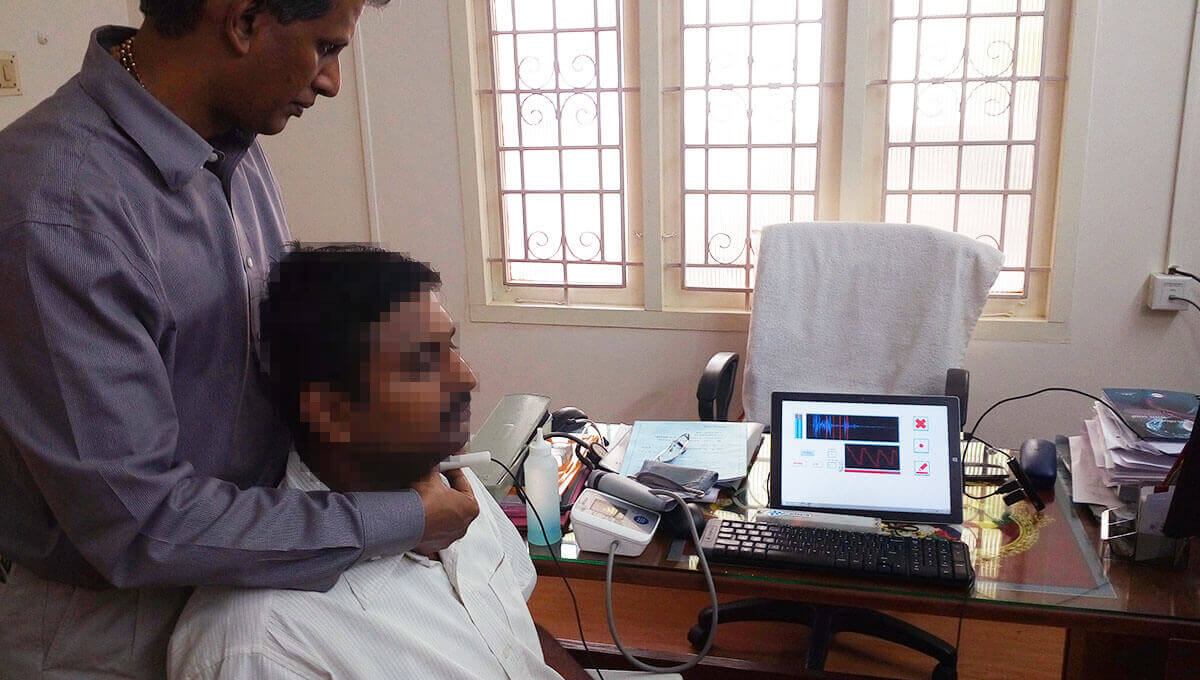
Systematic technical validation of the ARTSENS principle and its automated algorithms was performed to verify the device functionality as well as in-vivo measurement accuracy.
It was performed in collaboration with Thambiran Heart and Vascular Care Institute, Chennai.
Highlights
1. In-vivo measurement of arterial stiffness was conducted on 125 volunteers using ARTSENS Desktop (in a sitting posture) and Aloka Prosound α10 imaging system (in sitting and supine posture).
2. Blood samples were drawn from all volunteers to measure cholesterol and blood sugar levels, and anthropometric data were also recorded.
3. The carotid-radial pulse wave velocity was also measured on all the male subjects included in the study.
Results and Observations
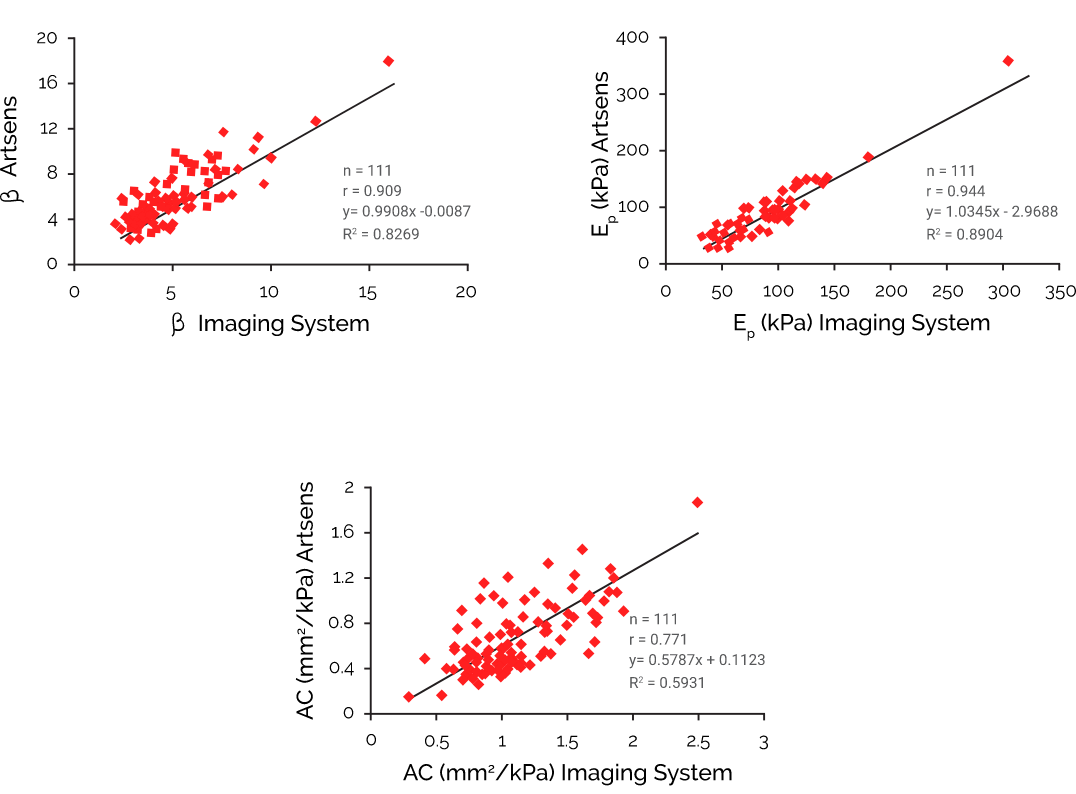
1. Data analysis of 111 subjects (after the outlier elimination) depicted a strong correlation between carotid stiffness indices measured by ARTSENS and those measured by the imaging system.
2. The correlation co-efficient (r) for, β was 0.9, while that for AC was 0.7, and for EP was 0.94.
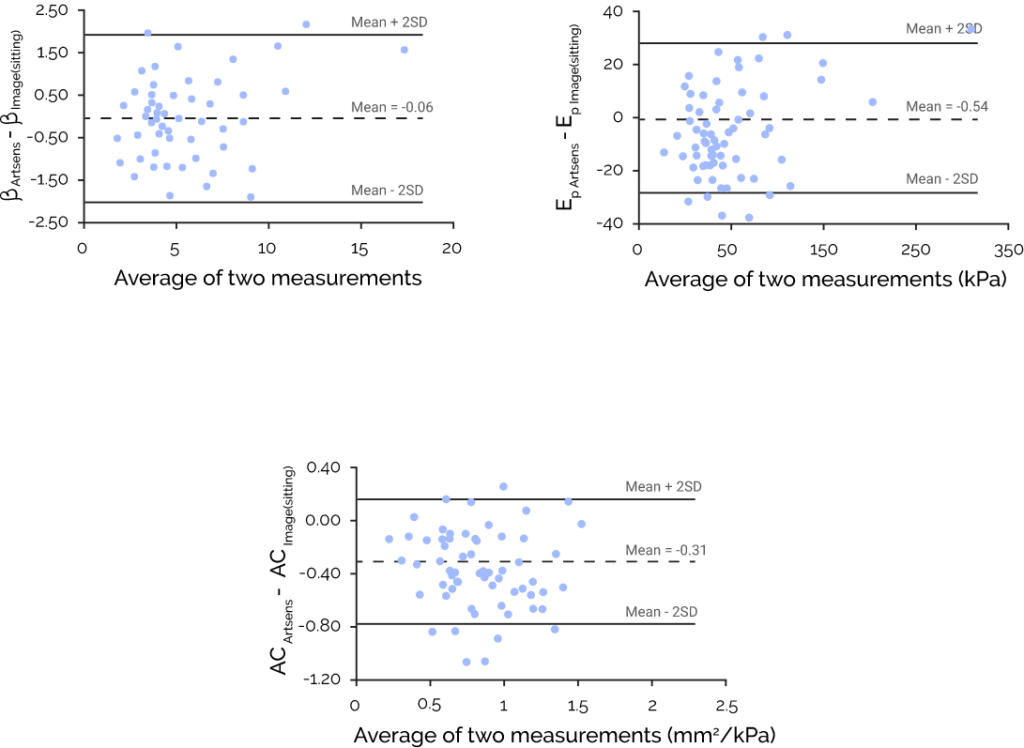
3. The mean difference between the β measurements given by the imaging system and ARTSENS was found to be 0.06 ± 1.04, indicating an insignificant bias.
4. Bland-Altman analysis revealed the difference to be randomly distributed, with 84% of the measurements within ± 1.5 SD. It was also found that 99% of all the measurements fell within mean ± 2 SD, within acceptable limits of variation.
5. A comparison of the stiffness measurements made by ARTSENS on the subject in sitting posture with those made by the imaging system with the subject in supine position also demonstrated strong correlation (r = 0.9 for β, r = 0.8 for AC, and r = 0.9 for EP).
6. Deming’s regression analysis demonstrated that there was no bias in the measurement of β and EP.
7. A strong trend of increased arterial stiffness with age was also observed, illustrating the ability of the device to detect age-related variations in arterial wall properties (age trends were analyzed after eliminating subjects on medication).
Comparison of carotid stiffness β, EP, and AC measurements from ARTSENS with those obtained from the imaging system
Bland-Altman plots of carotid stiffness β, EP, and AC measurements from ARTSENS and imaging system
This study verified
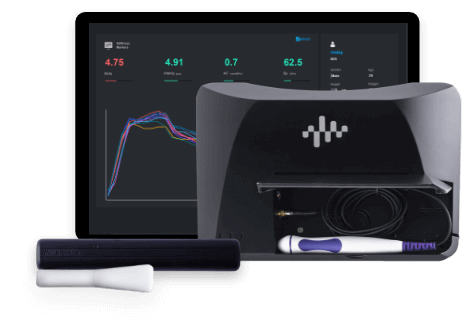
The feasibility of the novel ARTSENS technology in performing accurate in-vivo measurements of vascular stiffness.
