“Carotid stiffness variations in the presence of established risk factors: observations from a clinical study using ARTSENS”, in IEEE International Symposium on Medical Measurements and Applications (MeMeA), Bari, Italy, 2020, pp. 1–6.
Study at Sri Ramachandra Medical Centre, Chennai
Clinical Verification and Validation
This study was conducted on a subset of 390 volunteers recruited for the ongoing PURSE-HIS long term study on the cardiovascular risk factors. It was performed at Sri Ramachandra Medical Centre, Chennai, India.
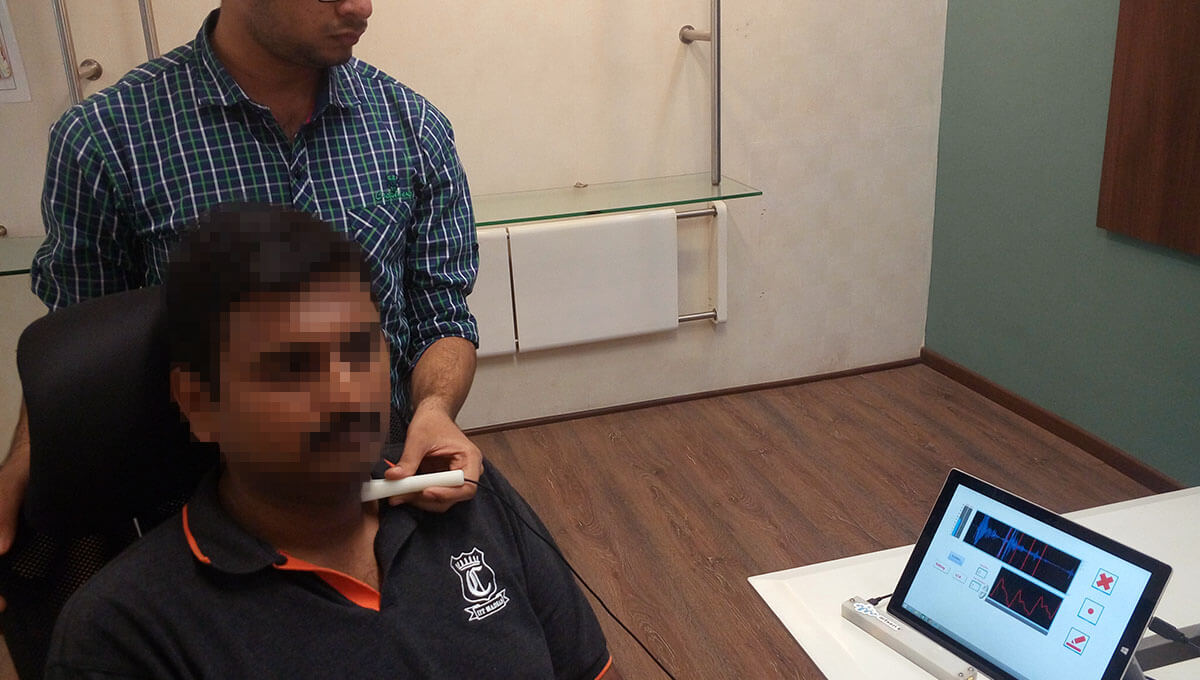
Participants
age: 45 ± 10 years
The study population included males and females, healthy young and aged subjects, and also subjects with identified risk factors.
Study Protocol
The study protocol involved
1. Collection of blood samples for Biochemical evaluation (fasting blood sugar, total cholesterol, triglycerides, LDL, and HDL)
2. Anthropometric measurements
3. Blood pressure measurement
4. Evaluation of carotid arterial stiffness (β, EP, and AC) using ARTSENS Desktop
5. The measurement of the carotid-femoral PWV using a clinical-grade SphygmoCor device
Results and Observations
1. Among the recruited 390 subjects, 373 subjects were considered for statistical analysis (post outlier elimination), they were classified into no, medium and high-risk groups based on IDF criteria for metabolic abnormalities.
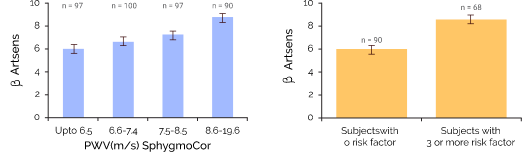
2. A statistically significant increasing trend in carotid stiffness was measured using ARTSENS in subjects who had higher values of aPWV.
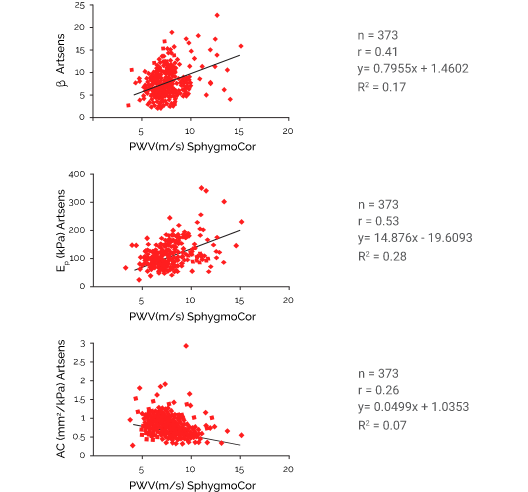
3. The values of β and EP given by ARTSENS positively correlated with cfPWV (r = 0.54 and 0.60) while AC was negatively correlated (r = – 0.52) after adjustment of age and gender.
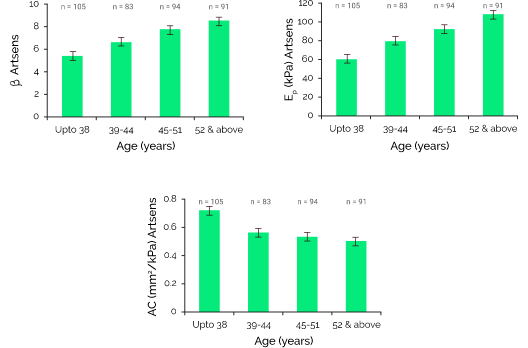
4. ARTSENS could detect the increase in arterial stiffness associated with age in a manner equivalent to that given by the reference aPWV, with a slightly wider range of variation across age quartiles.
5. It could also detect increased arterial stiffness associated with the presence of risk factors.
6. Statistically significant increase in carotid arterial stiffness values was observed between subjects classified as ‘no risk,’ ‘medium risk’ and ‘high risk’ based on the presence of multiple risk factors.
Comparison of carotid stiffness β, EP, and AC from ARTSENS against cfPWV from SphygmoCor
Age-related trends in β, EP, and AC measured using ARTSENS
Higher carotid stiffness with the presence of risk factors and higher PWV
This study demonstrated
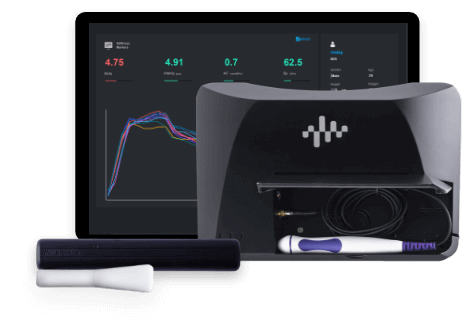
The utility of ARTSENS in detecting changes in arterial stiffness, which can otherwise be detected by performing a laborious aPWV measurement.
It also showed the potential utility of ARTSENS as a more practical, easy to use device for evaluating vascular stiffness.
