“Assessment of carotid stiffness in community settings with ARTSENS”, IEEE Journal of Translational Engineering in Health and Medicine, 2020, under review.
Epidemiological Field Study
Evaluation of Carotid Stiffness Distribution in South Indian Population
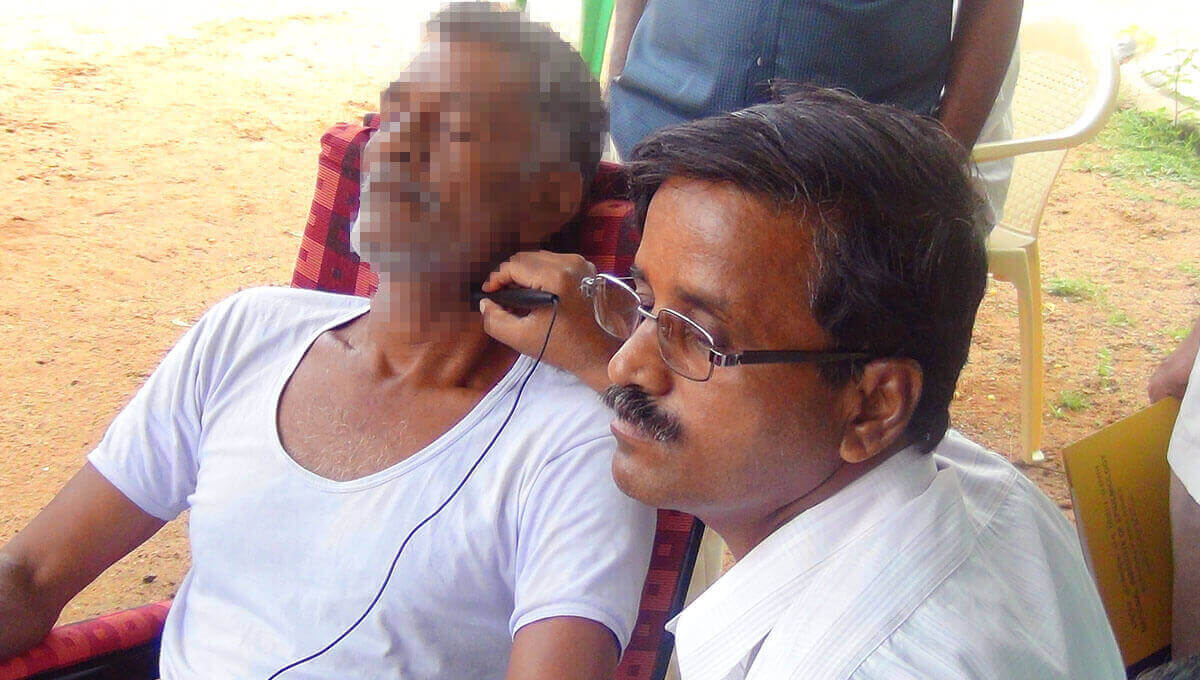
An extensive field study, in collaboration with the National Institute of Epidemiology (NIE), ICMR, Chennai, was conducted to evaluate the usability of ARTSENS for the quick and reliable evaluation of the carotid stiffness under field conditions.
Highlights
1. This analytical cross-sectional study among 1074 (above 30 years) is the first reported community-level study conducted in India to describe the distribution of the vascular stiffness parameters.
2. It was also aimed to collect preliminary data regarding the prevalence of arterial stiffness and other vascular risk factors in the rural population, with the ultimate objective to identify the population specific cut-offs for screening.
3. Data for CVD risk factors such as age, education, tobacco use, alcohol consumption, self-reported hypertension, and self-reported diabetes were collected using a structured questionnaire.
4. The blood sample was collected for measuring fasting plasma glucose, high density lipoprotein cholesterol, and triglycerides.
5. Reliable arterial stiffness indices (β, EP, AC, and PWVβ) were measured from the left common carotid artery using ARTSENS Touch.
Results and Observations
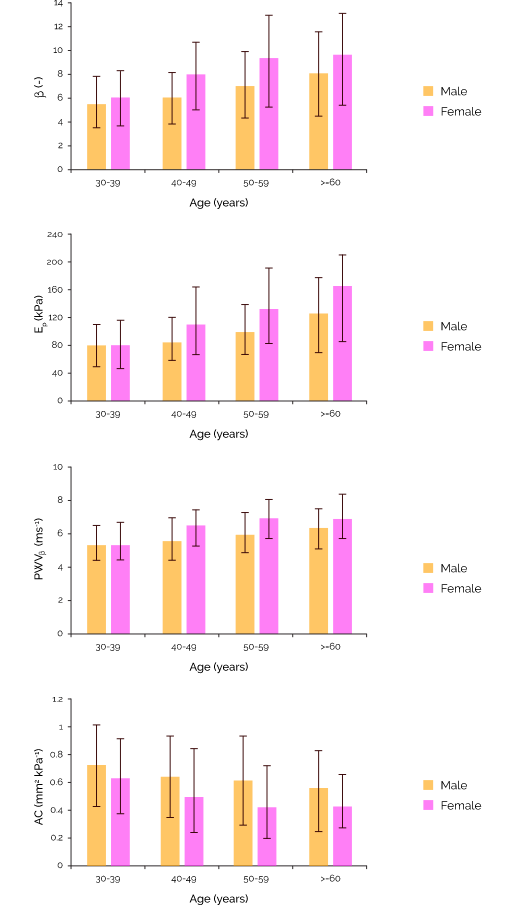
1. Carotid stiffness was higher in females in comparison to males (β: 8.1 ± 3.5 versus 6.5 ± 2.7, EP: 113.2 ± 56.1 kPa versus 92.3 ± 40.6 kPa, PWVβ: 6.3 ± 1.3 m/s versus 5.8 ±1.1 m/s); for all p < 0.01. Mean β, EP, and PWVβ increased across age groups.
2. After excluding diabetes and hypertension, all parameters were comparable across the population. Subjects with higher EP and PWVβ were twice as likely to have multiple cardiometabolic risk factors.
3. The observed association between metabolic abnormalities and carotid stiffness parameters suggests their potential utility in screening high-risk subjects with multiple CVD risk factors via performing population-level studies.
Age trends of the carotid stiffness indices (β, EP, PWVβ, and AC)
This study illustrated
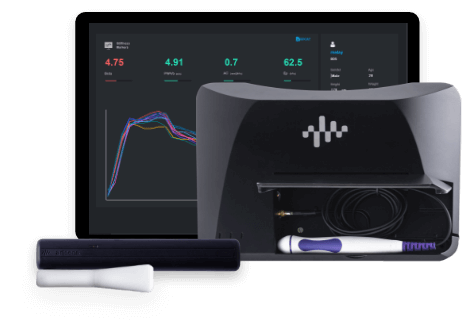
The feasibility of performing carotid stiffness measurements in out-of-hospital settings using ARTSENS, with repeatability sufficient for population studies.
It also demonstrated that operators with no clinical background could be trained to operate ARTSENS within a short span and perform reliable measurements in the field.
